Yobe State
Desertification and sand encroachment across Yobe frontline communities
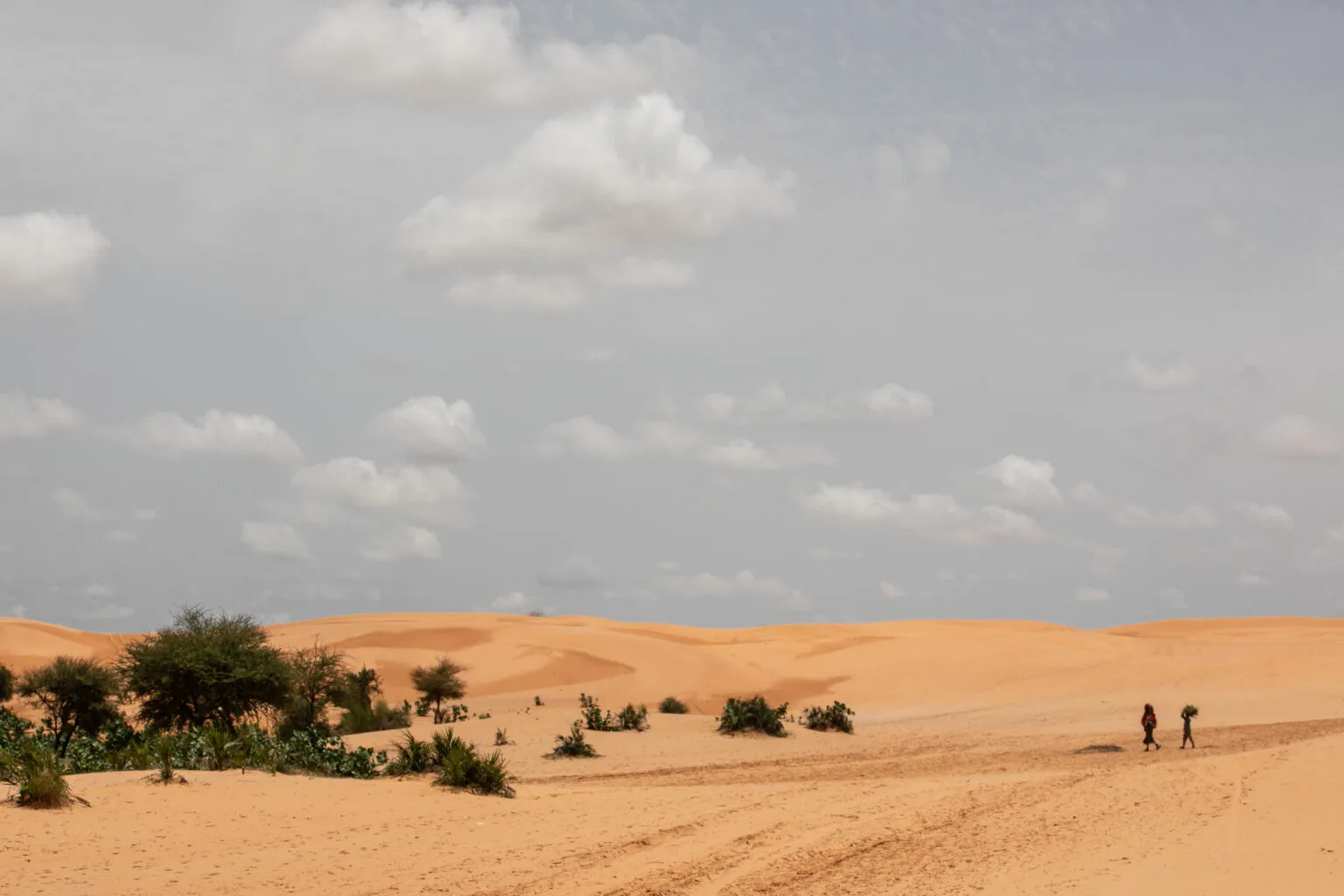
In the Sudano-Sahelian drylands of Yobe, advancing sand dunes on the northern flank and gully erosion in the south are stripping vegetation, burying farmland and oases, drying up water sources and pushing rural households deeper into food insecurity and displacement. Dunes are reported to advance by roughly 0.6 km each year, and satellite analysis shows tree cover falling from about 583 km² in 1975 to some 285 km² by 2013. Overgrazing – worsened by the yearly influx of herders from neighbouring Niger Republic, especially around Yusufari – strips soil cover and compacts the ground, making it easier for wind to spread sand. As farmland shrinks, harvests fall short, incomes drop and more households face hunger and pressure to relocate.
Evidence and current condition
- Yobe sits in Nigeria's Sudano-Sahelian belt where sand dunes are reported to advance by roughly 0.6 km per year on the northern flank while gully erosion degrades land in the south.
- Landsat analysis shows tree cover in the state collapsing from about 582.8 km² in 1975 to roughly 284.7 km² by 2013, with shrubs and grasslands falling from nearly 1,990 km² to about 669 km² over the same period.
- Nigeria loses an estimated 350,000 hectares of land to desert encroachment each year, and Yobe is among the frontline states bearing the heaviest share of that loss.
- Overgrazing – worsened by the yearly influx of herders from neighbouring Niger Republic, especially in Yusufari – strips soil cover and compacts the ground, making it easier for wind to spread sand.
- As farmland shrinks, harvests fall short, incomes drop and households face hunger, deeper poverty and pressure to relocate.
Coordinates
| Area | Latitude | Longitude | Neighborhood |
|---|---|---|---|
| Yusufari | 13.0700° | 11.1800° | Northern flank – active dune encroachment |
| Nguru | 12.8790° | 10.4530° | Hadejia-Nguru wetlands margin |
| Gashua (Bade) | 12.8730° | 11.0490° | Yobe River corridor |
| Damaturu | 11.7470° | 11.9660° | State capital / policy coordination |
Required interventions
- The World Bank-supported Agro-Climatic Resilience in Semi-Arid Landscapes (ACReSAL) programme delivering catchment management and land restoration across the state.
- The Yobe State Climate Change Policy 2025, a framework to coordinate the state's response to desertification and climate risk.
- A 2025 state tree-planting campaign to reclaim degraded land, alongside NAGGW shelterbelt development and date palm seedling distribution in frontline LGAs.
- Community revolving funds and livelihood support to reduce pressure on remaining vegetation.
- Monitoring seedling survival to maturity – the real test of the campaigns – rather than counting only trees planted.
Additional proof sources
- 1. Daily Post – “Desertification, gully erosion pose existential threat to Yobe” (9 February 2026).
https://dailypost.ng/2026/02/09/desertification-gully-erosion-pose-existential-threat-to-yobe/ - 2. Prime Progress – “Can Yobe's new tree-planting campaign help reclaim its land?”.
https://primeprogressng.com/prime-agro/can-yobes-new-tree-planting-campaign-help-reclaim-its-land/
Funding and support needed
Documentation is being prepared for implementation support and community participation.
Covers: Shelterbelt and dune stabilisation, seedling nurseries and survival monitoring, community revolving funds and alternative livelihoods
Potential funding partners
Institutions aligned with this work
These are potential alignment examples, not confirmed funding commitments. Partner documentation will be updated as conversations progress.
How others can help
- • Donate to support field documentation, community workshops and restoration work.
- • Partner with the project for research collaboration and knowledge exchange.
- • Volunteer for data review, outreach or event support where available.